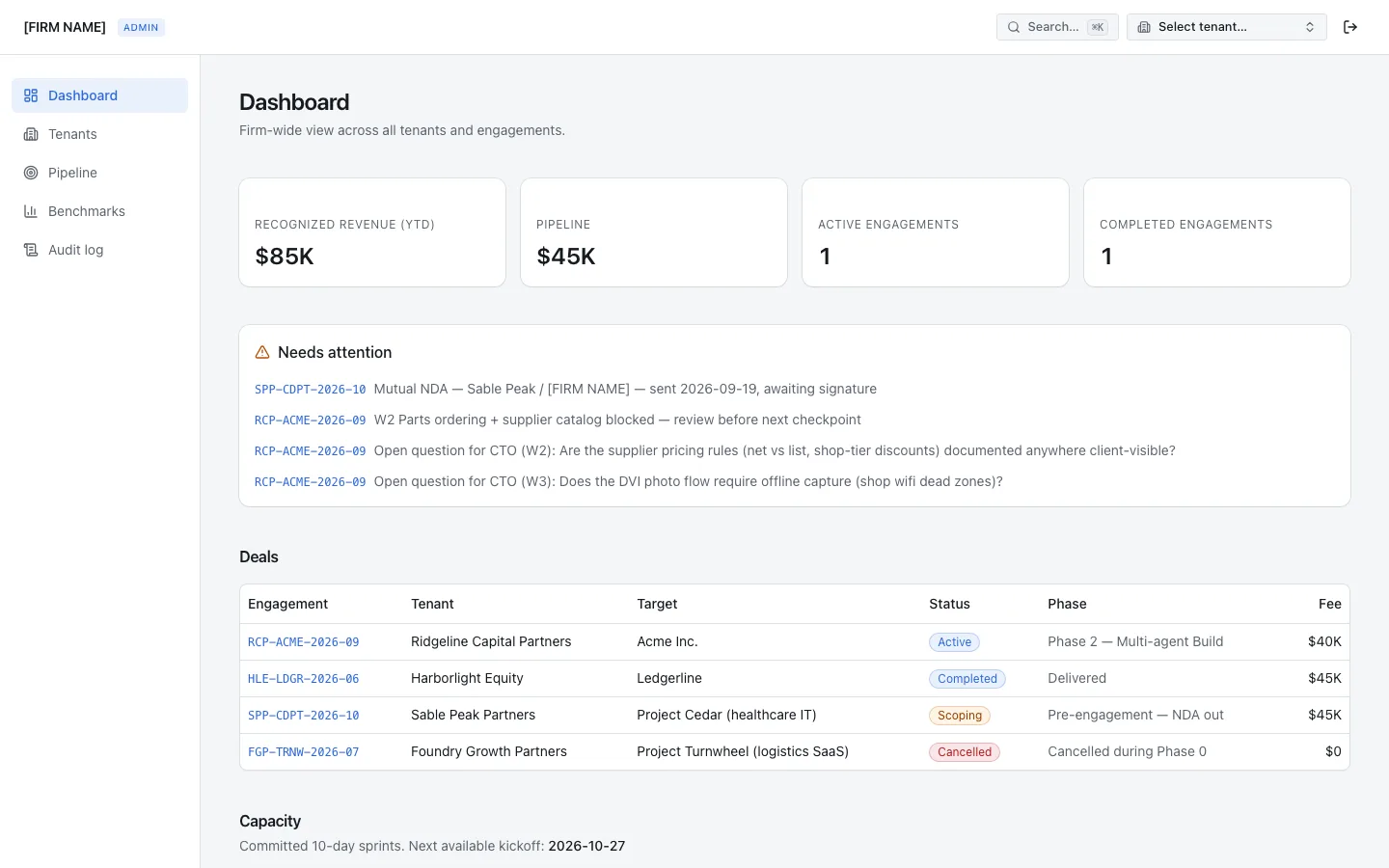
AI due-diligence advisory
Rebuild-based technical diligence for private equity — reconstructing a target's product during the deal to measure which moats are real.
Why now
For two decades, software valuations assumed a mature product represented years of engineering a competitor would have to repeat. Technical diligence tested whether the code was sound; it rarely tested whether the code was the moat. AI-assisted engineering changed that — well-understood workflows can now be reconstructed by a small team in weeks.
The approach
Instead of estimating replication cost, the firm measures it directly:
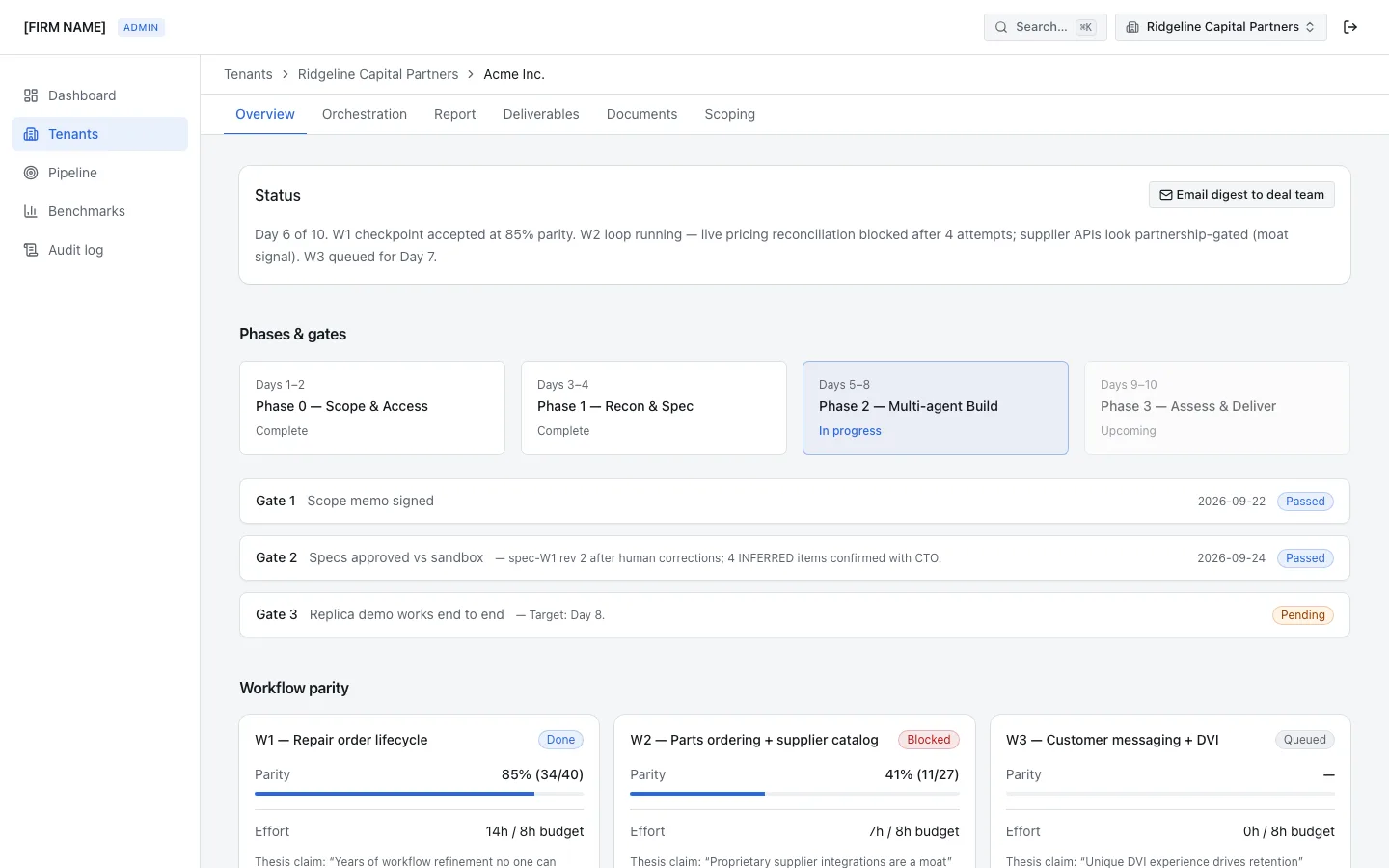
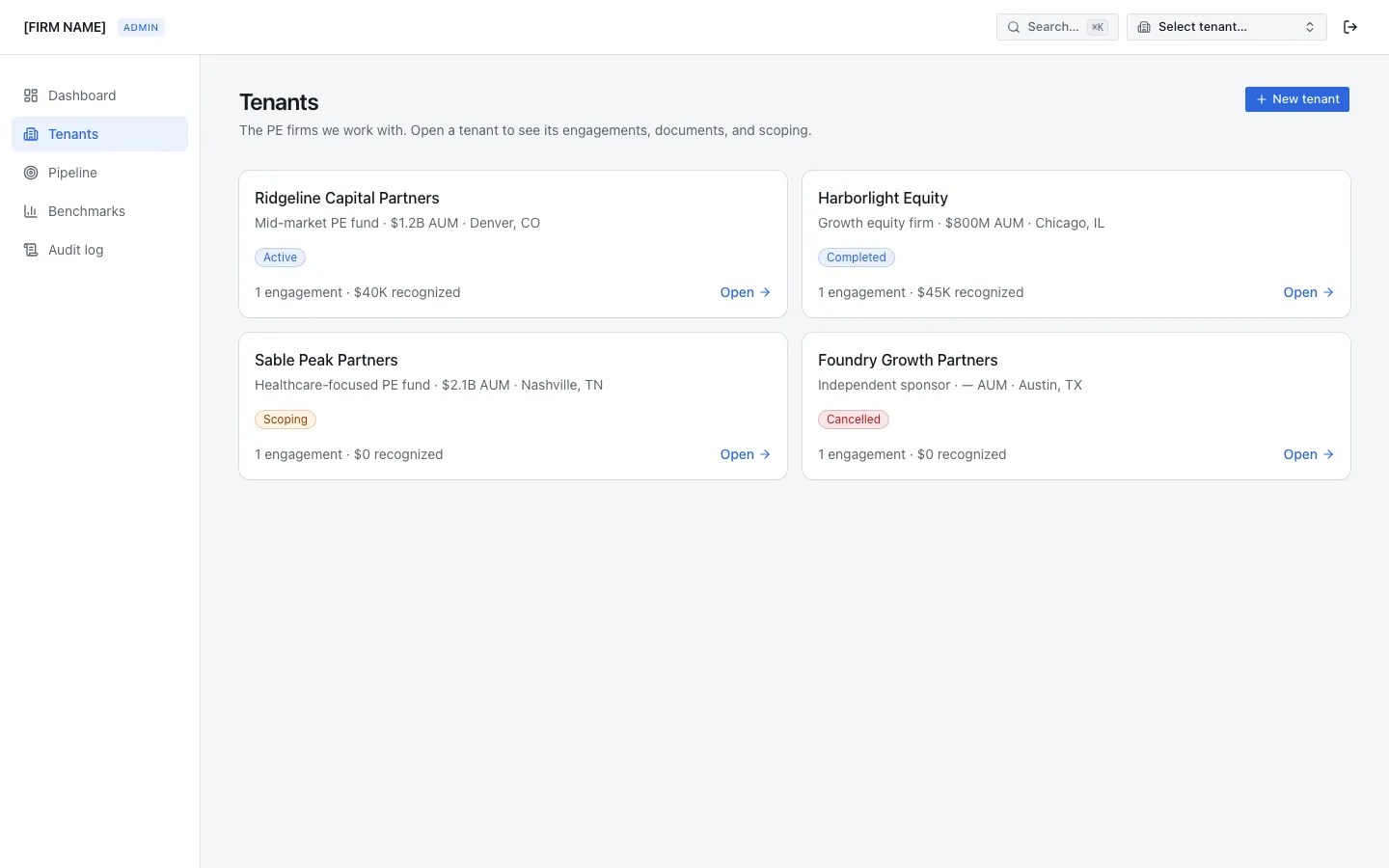
- Scope. With the deal team, identify the two or three workflows the investment thesis actually depends on.
- Recon & build. Study the product from the outside and rebuild those workflows with AI-assisted engineering.
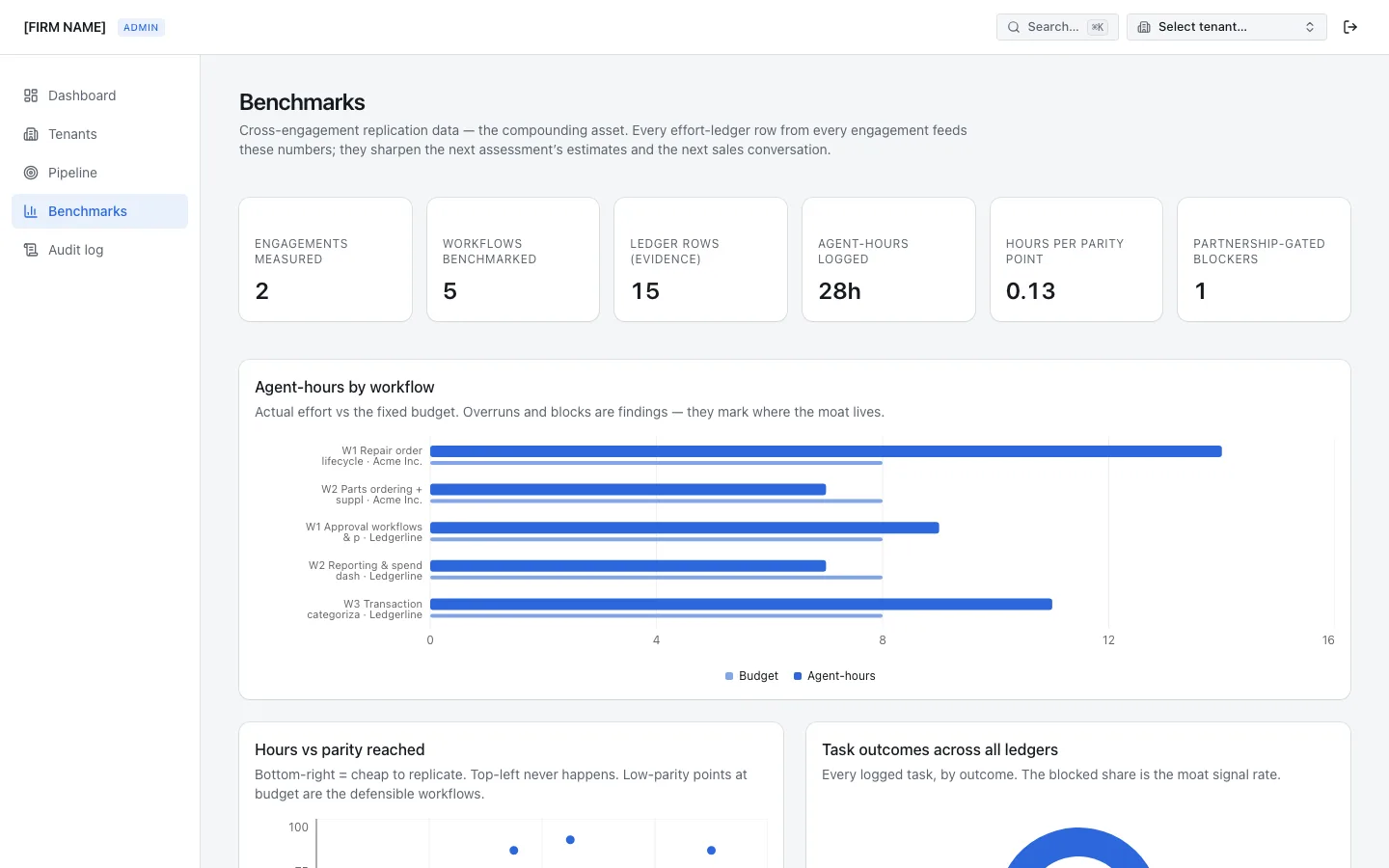
- Assess. Measure how far parity got, what slowed it down, and what stopped it entirely — and why.
- Deliver. A working demo, a moat scorecard and a concrete replication timeline that a deal committee can act on.
What a readout tells you
Where the rebuild reached parity quickly, the software itself is unlikely to carry the premium. Where it stalled, the readout names the specific barrier — accumulated data, contracts, certifications, integrations — so valuation and confirmatory diligence can focus on what actually protects the business.
The firm is in stealth. If you work in private equity and want to compare notes on AI in technical diligence, get in touch.
Screens